

St. Joseph's Adolescent School

Bloom 2026
Éalú: The Getaway Garden
A space to connect with nature and rekindle what’s important to me


Follow our journey to Bloom 2026

Éalú: The Getaway Garden
Our postcard garden project aimed to represent an inclusive and accessible space for young people, a place where one can escape the clinical hospital environment.
In January 2026 we asked students to identify why they enjoy being out in nature. The sensory experience - the sound of water or rain, or the rustling leaves, the smell of flowers and herbs, the feeling of fresh air, the sight of something different (as an escape) or something familiar that brought comfort or the promise of a deliciously ripe strawberry or raspberry were key reasons why students placed a value on the outdoors. Students also identified being busy, experiencing the spiritual beauty of nature, observing growth, connecting with wildlife and a feeling of calm as therapeutic benefits of gardens and nature.
Drawing from this, students identified the theme of 'Escape' for the garden. This held different meanings for each student - a holiday escape, an escape from the daily routine, escape from the burden of heavy thoughts, or just some time out. There was a strong sentiment that the garden must not have that 'M50 feeling'.
What's in a name?
In coming up with a name, we considered the sounds that different words make - did we want a name with hard words like 'crua' or 'crunch', or the soothing sounds of 'slumber' or 'suaimhneas'. Should the name be functional or evocative? Definitely not functional!
From a variety of words, students most liked words with long vowel sounds - hence the name Éalú (Escape). As for 'Getaway Garden' - that was a flash of brilliance from a student on their first day at school with us.


How does your garden grow?
The garden, and outdoor space has been used as a timeout space, a recreation space, a therapeutic space and a teaching/learning space. In June we harvest Elder flowers and make elderflower cordial for our end of year celebration.
Designing the garden for Bloom, gave us the opportunity to decide what the garden's mood should be. How do we create a sense of 'escape'. Where do we escape to? Week by week, we worked on this. Students identified the specific fruit, vegetables and herbs they wanted to grow - based on colour, flavour, texture and use. They also considered the wildlife that they wanted to attract to the garden.
The cherry blossom tree, for example, represents Japan, a country where students might like to one day visit. Lavender and other scented plants represent their calming, therapeutic uses. Fruit and vegetables represent the taste of the seasons, or special meals and occasions.


How will the Getaway Garden look?

Following a visit to the Childvision Garden Centre we each contributed our ideas (a big thank you to Philip who introduced us to the curry plant and the weeping cherry blossom, and gave us some guidance).
These are the notes taken by a student at the meeting.
Over the February midterm, Nicola, the Occupational Therapist continued to work with students to create a mood board to represent our ideas.
Creating our elevation plan and planting plan involved cutting out circles and triangles and figuring out how everything fits in!


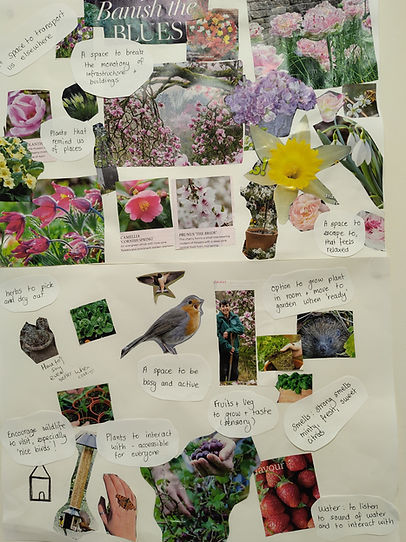
Planning our Planting
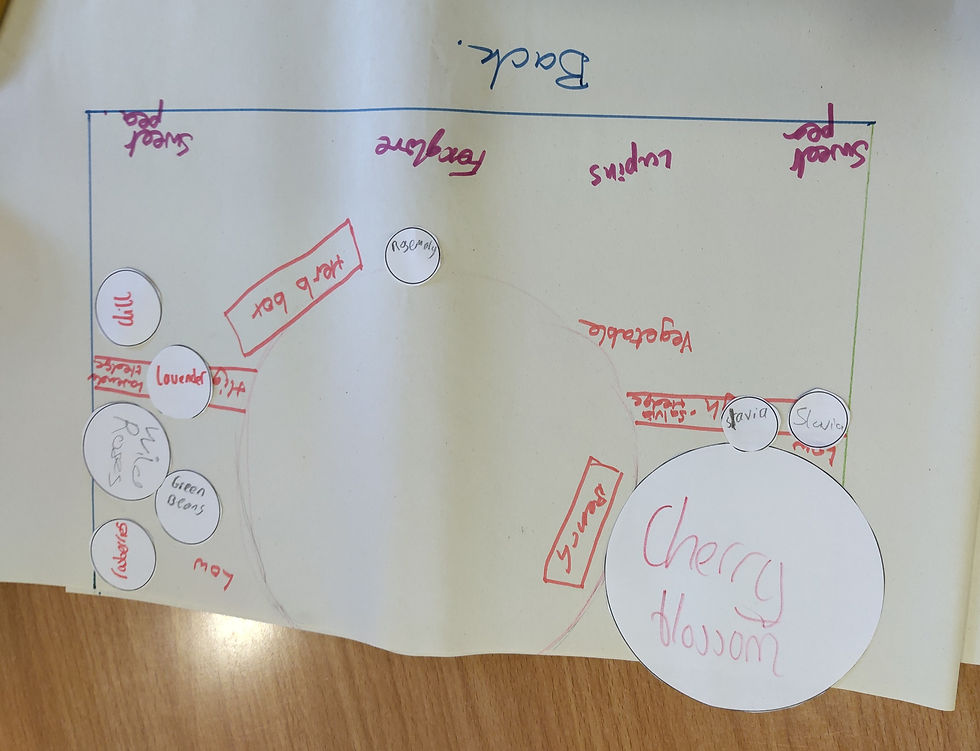


In February, students came up with an initial planting plan, having visited Childvision and drawn on their own knowledge of plants and gardens.
In May, as we near the building date at Bloom, students engaged in discussions regarding plants that promote biodiversity and encourage pollination. We explored the difference between native plants (e.g. foxgloves) and genetically modified plants (e.g. petunias). Students decided not to include petunias which despite their colour to attract pollinators have very little nectar for the bees. Instead we have favoured the native and rather elegant foxglove.
Adopt-a-plant
Our school is a hospital school, which means that students attend only for the duration of their hospital admission. When a student leaves, the care of plants is passed onto another. In some cases students named their plants (e.g. Vincent Van Grow). Some plants went through tough times - one (ice flower) required transfer for intensive care by our expert gardener (and Maths teacher) Mary. The cucumber plants did well initially, but during the Easter holidays they photosynthesised their last breath, and were replaced. The Nasturtium (name Petunia) also did well initially but the windy March weather meant it had a set back.
Click on the various images below to find out how the plants are currently doing.
Strawberry


Tomatoes

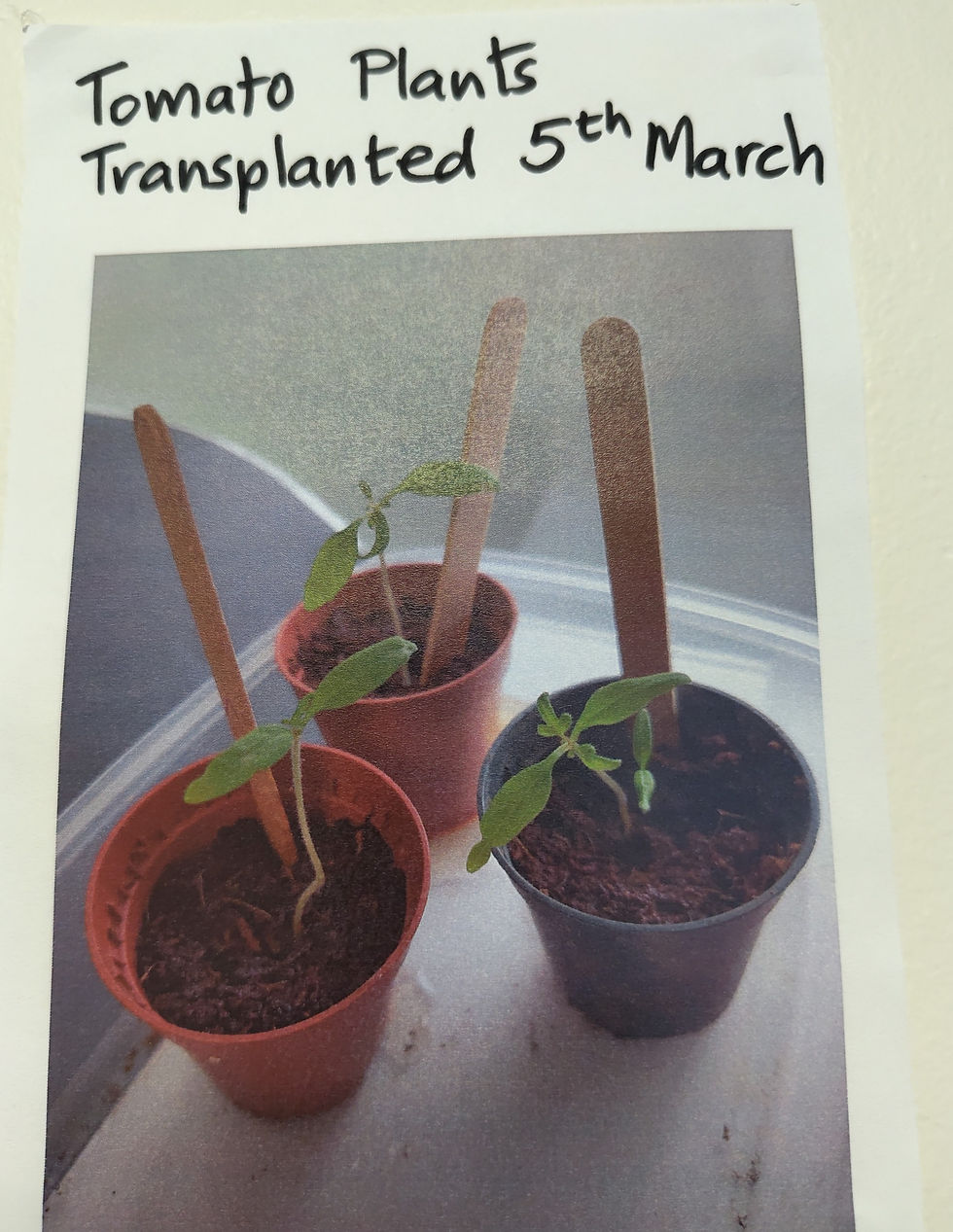

Ice flower (named 'Stephanie' by a student)


Sweet Pea


Lupins


Leeks (Bleu de Solaise)


Cucumber (named 'Fred Vance' by a student)

Early in 2026, students in the Day Hospital planted and named their plants. Great care was given to these plants, and the cucumber plant in particular established itself quickly. Unfortunately during the February midterm, we lost all but one of the seedlings, and during the Easter break the surviving plant died of thirst. The plant, 'Fred II', in the video is a replacement (Can we ever really replace the original?). This timelapse video shows Fred II moving its tendril.
The cucumber uses it's tendrils to wrap around a support as it grows towards the sun. It will also use the tendril to support itself against the weight of the plant once it begins to bear its fruit. While the video captures the plant moving its tendril, perhaps searching for a suitable support, we don't see the winding of the tendril.
(The time-lapse video was made over a 6 hour time period, with a new support inserted in the hope that it would wind itself).
Garden peas, pole beans and mange tout


Construction begins...
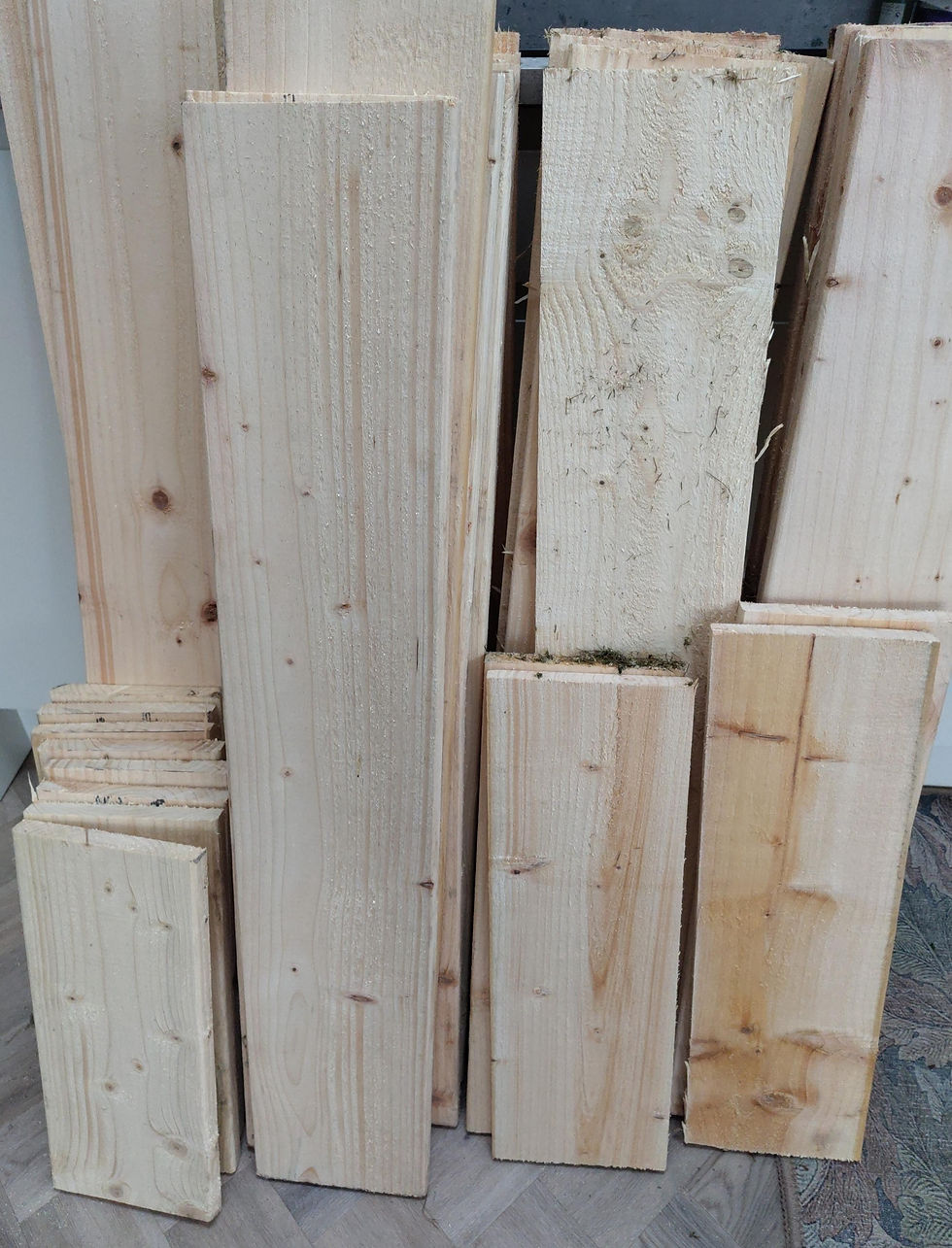


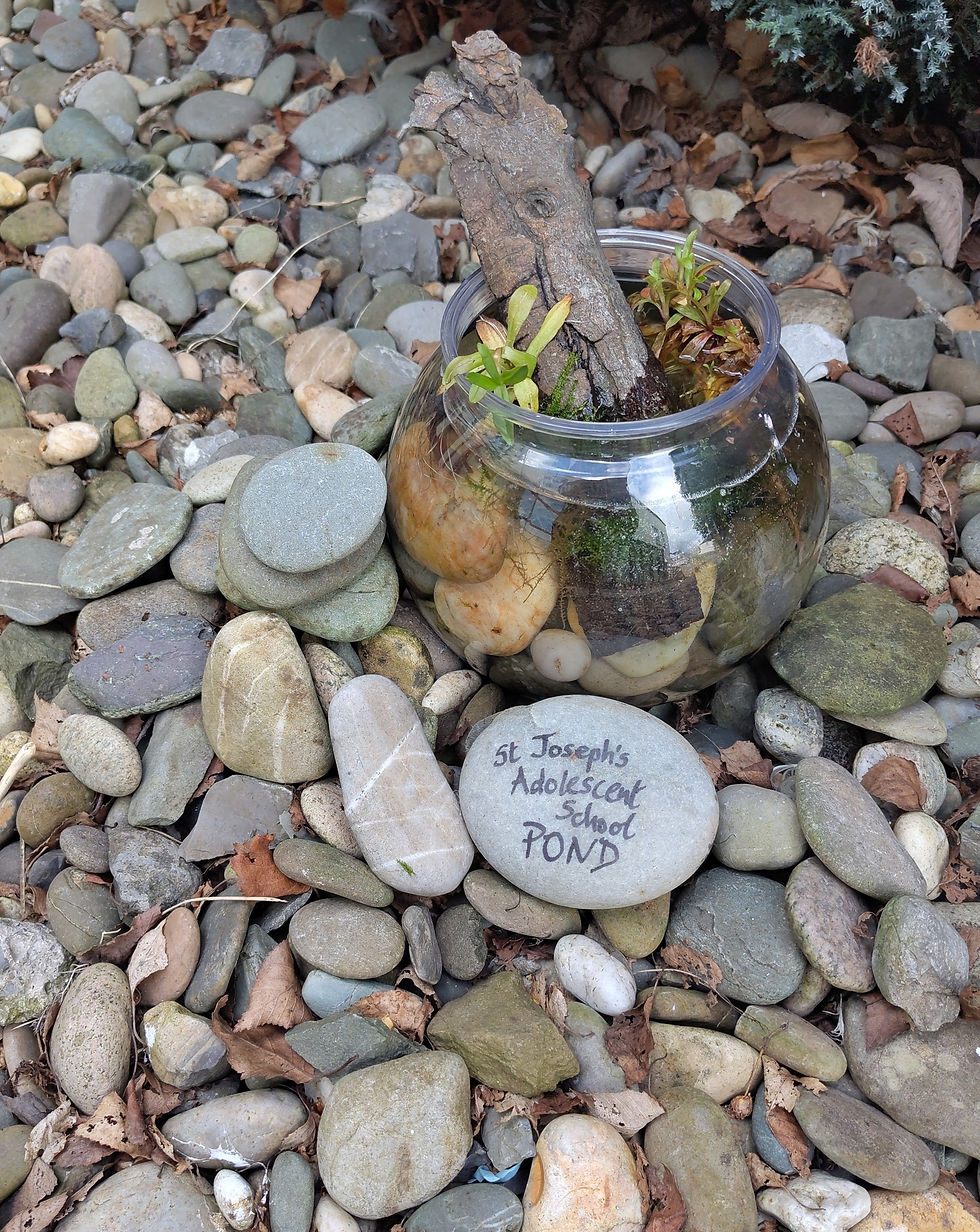
Building a pond
Including a pond in a garden, whatever size is excellent for promoting biodiversity. In the Day Hospital we found a container filled with rainwater and a plant growing in it. We took a sample and once the sample had settled we found lots of insects living in the water. Using sticks and stones from the courtyard and rainwater, we made our own pond, including a 'gangway' in the hope that we till encourage insects to visit.
We also build a small pond in the inpatient unit. We included an oxygenator plant, and two 'marginals'. We found a jelly like substance on the roots of these plants. After a few days the it looked like there were dots in the jelly, and we wondered if they were the early developmental stages of insects. We waited a few days more and noticed that they were the early stages of algal growth.


Physics and an interactive water feature
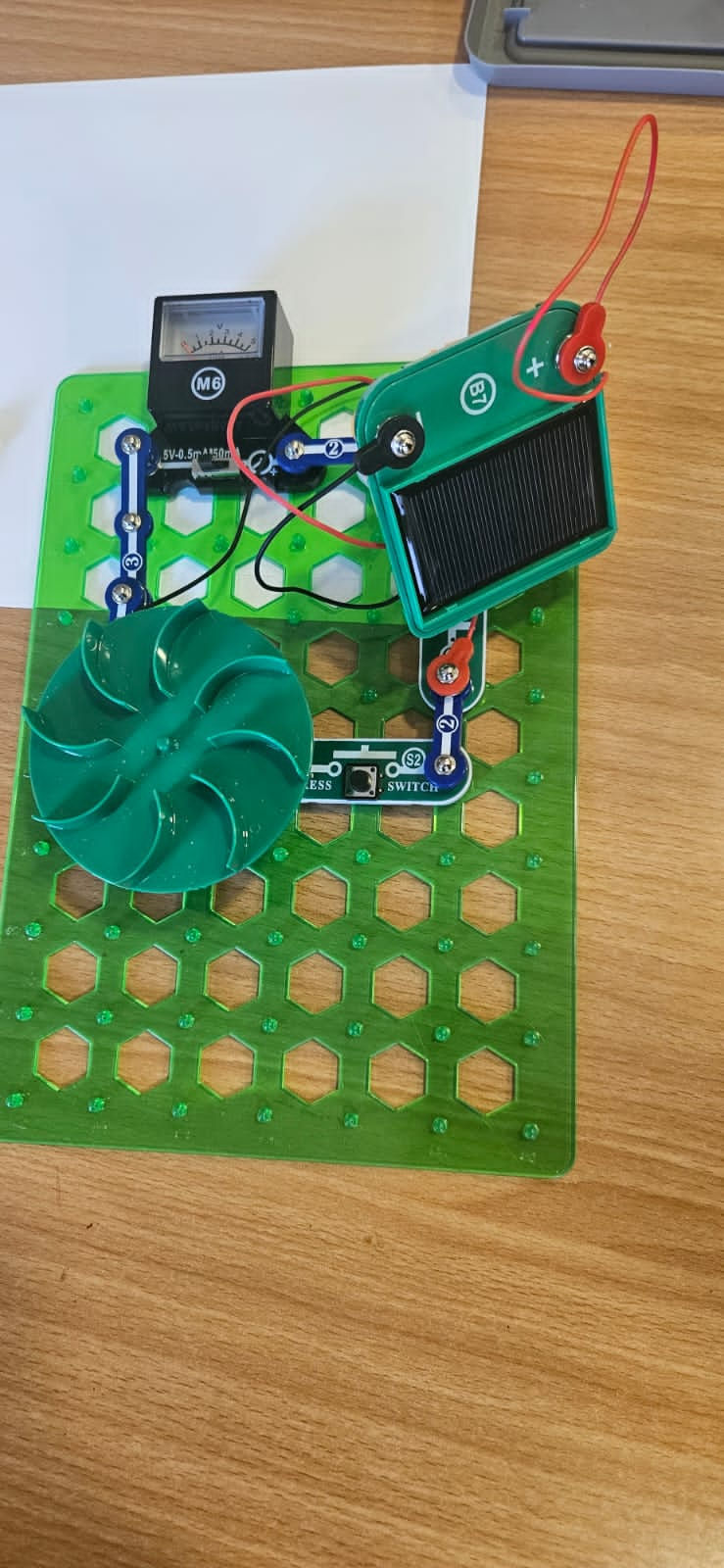
Students listed the sound of water and the presence of water as being peaceful and calming. In April, students set about testing a few different options for creating a sustainable water feature. One student described the videos found online as 'clickbait' as the 'perpetual' fountains advertised lasted little longer than the blink of an eye.
In making, testing a comparing a variety of simple fountains, students experienced the fun of being busy, doing and learning by inquiry. Our students discovered that the displacement of water by air worked, but the result was short lived. They also found out that using paper straws didn't withstand being immersed in water...but we did find that designing a circuit that converted solar energy into enough kinetic energy would turn the water turbine. Thanks Angela (Maths teacher) for the engineering and design support!


The Science and Art of Sound...


Physics includes the study of energy - the science to explain Light, Sound, Movement, Heat, Electricity etc. It explains what we might otherwise put down to 'magic'. Together with Laura (music teacher) and Rosaleen (science teacher) we learned about how sound is made, that it travels in waves, that some animals use it for flight (e.g. bats - echolocation), and how the material, length and depth can effect the sound we hear. Nicola (Occupational Therapist) explained how some people like some sounds and others don't.
Students identified that the sound made by the rain shaker was pleasant, and different materials were used to get the sound 'just right'. Using recycled or found materials, students made a prototype bamboo wind chime that will be used on the perimeter of the garden.
Big enough to plant out...let the planting begin


Plants that students started to grow in January are now (early May) ready to be transplanted into baskets to be put into position in the postcard garden at Bloom. Students decided where to place the various ground cover plants using compost. Prior to the planting there was horror at the thought that the compost contained cow manure....while it doesn't, it is a great suggestion...
A big thank you to students who remember to water the plants!
'Here are cool mosses deep'
From 'The Lotus Eaters' by Lord Tennyson
A whistlestop journey into the poetry of Tennyson, Clarke, Yeats, and Kinsella exploring themes of nature, imagery and the features of language, to support students to generate text and possibly even verse to include in our garden.
Using the book 'Irish Trees - Myths, Legends and Folklore' by Niall Mac Coitir one student learned about the Yew tree, its poisonous leaves and association with death, and was inspired to write a short and clever verse.


Using poems as prompts, students identified words that resonated with them and gave feedback about why they like being outside


What 'Escape' means to me
The Final Countdown


With our plants now growing (and thankfully being watered by students, teachers, and nurses), our attention was now on bringing the whole project together - to capture what it is to 'escape'.
Éalú go Páirc an Fhionnuisce

Packed up and ready to go

Before

Packed up and ready to go
Monday 25th May was building day! It was an absolute scorcher of a day, but the energy was mighty! The sense of community and support was amazing. Everyone was so encouraging and helpful. Nicola (Occupational Therapist & general motivator) not only kept the build moving forward, but also took some time out to capture some of the positive feedback people had for our student's work. Well done to everyone and thank you. We have all been part of something bigger than ourselves.